
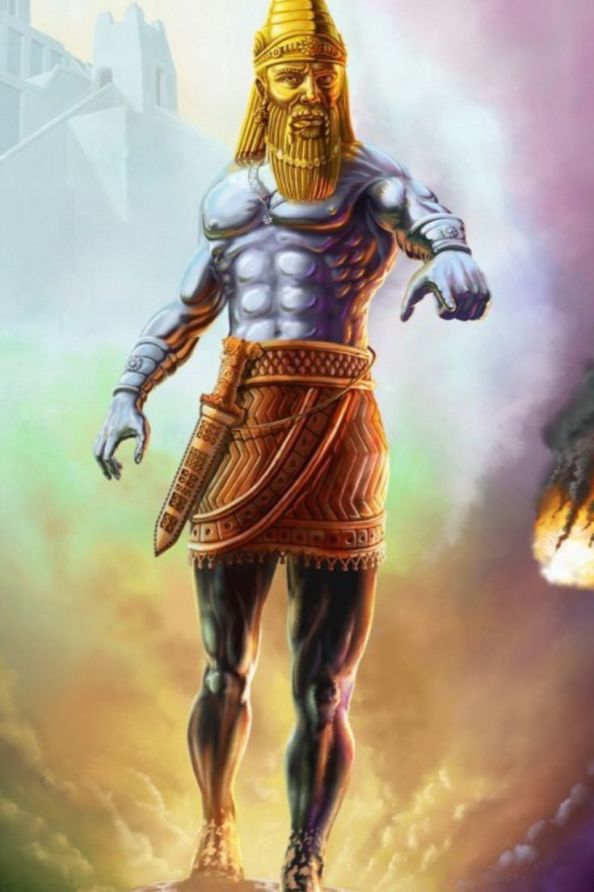
If you have been keeping up with my end times posts, you may have noticed that there is somewhat of a progression. I may take some pauses to go back and elaborate something further, but I never stray too far away from the natural progression. If you jump in and start reading in the middle, you may find yourself a little confused at first. You will miss the big picture and fail to see the greater context. The same goes when reading a book or jumping into a movie halfway through. Things will look out of place and not make much sense if you start in the middle. This post especially will be an example of this fact. Standing alone, this post may look out of place. It may seem random. You may question how this fits into the natural progression I have been going through. It’s a post on the thematic chronology of the book of Daniel. There is a reason, however, for its placement here that will make sense with upcoming posts. When you see it alongside its broader thematic context the purpose will become much more clear.
As I just stated, the Book of Daniel is a book that is best understood along the lines of the thematic chronology stretched throughout it. I’ve heard a lot of people say that the first 6 chapters of Daniel are super easy to understand, but the last 6 are much too difficult for the casual reader. The first 6 follow a narrative, and the last 6 list crazy prophetic visions Daniel has. Sure, if you are the casual Bible reader, I agree. The latter half especially will not make a lot of sense. But we aren’t casual readers over here. We dig deep into the Word of God. And if you truly want to understand the Book of Daniel more, then you must look at the book from a different angle. Don’t simply divide it between the narrative elements and the prophetic. Divide is by its thematic chronology.
What is thematic chronology, you may ask? Simply put, it is a repeated succession of different themes. A theme is a unifying idea, image or concept that is carried through a book/story. A thematic chronology is a repeated succession or unfolding of those various themes. Thematic chronologies tell a bigger story by linking passages by their relating theme.
The book of Daniel has 3 themes that are repeated in a pattern. Those themes are:
- Mankind places itself above God.
- The faithful to God suffer Persecution but are Redeemed by God
- The prideful are punished
Theme number one begins in chapter 2. Chapter 1 sets the stage and describes the events that led to Daniel and his friends landing in Babylon. In chapter 2, however, King Nebuchadnezzar has a dream that only Daniel can interpret because the Lord revealed it to him. The dream was of a statue made from four different metals. The head was made of gold, the chest and arms of silver, the belly and waist of bronze, the legs of iron, and the feet of iron and clay. Each section symbolizes a sequence of present and future kingdoms. The gold head symbolized the current Babylonian empire. The chest and arms represent the Medo-Persian Empire. The belly and waist of bronze represents the Greek Empire, and the iron legs represent the Roman Empire. We will get to the feet of iron and clay here in a moment. The dream concluded with a giant rock getting hurdled at the statue, shattering it completely. The rock forms a mountain in the statue’s place. This image depicts how magnificent the kingdoms of man are in their own eyes. Man views itself as glorious, beautiful and strong. Theme number one is evident. However, it reaches a climactic point as we look on to chapter 3.
In chapter 3, we see how King Nebuchadnezzar responds to this dream. It seems that he was more impressed that Daniel correctly described his dream than he was concerned with the interpretation of it. He saw a beautiful statue, not the rock that came to destroy it. All he seemed to understand was that he represented the head of this magnificent statue and deserves praise. He let it get to his head, (Pun intended). So, he built his own massive golden statue to represent his imperial power and glory. He demanded that everyone bow down and worship this image. This is the climax of theme 1. The kingdoms of man will worship man in the place of God. Mankind sees their might and glory as a beautiful statue. Mankind builds an idol in their image and likeness. Mankind demands that it be worshiped as God.
Who suffers because of this? The faithful do. Theme 2: The faithful to God suffer persecution but are Redeemed by God. Shadrack, Meshak and Abednego refused to bow down to this idol, and as a result, they were cast into the king’s fiery furnace. This did not go as the king planned, however. The Lord was with Shadrack, Meshak and Abednego in the furnace (literally) and kept them from harm. They walked out of the furnace, to the king’s amazement, and he declared their God as the true God. This is the 2nd theme we observe clearly. The faithful were persecuted, but God redeemed them.
Still, after all king Nebuchadnezzar has witnessed, he still thinks of himself as a “god” who can do no wrong. In chapter 4, the king receives another warning of his demise. This time it was a specific prophecy regarding him personally. Daniel warned him that unless he renounces sin and does what is right, he will be cast out and become like a beast of the field. If he acknowledges God’s sovereignty over the kingdoms of the world, his prosperity and humanity will be restored. About a year later, Nebuchadnezzar’s pride fumed once again as he saw all the splendor and glory of Babylon that was built by his own power and might. At that moment, the prophecy came true. Nebuchadnezzar became a mindless beast and was cast out into the wilderness. His story, however, did not end there. The chapter ends with Nebuchadnezzar’s sanity being restored after 7 years of humbling. His humanity and authority were restored, and he became greater than ever before. In his own words, he stated, “Now I, Nebuchadnezzar, praise and exalt and glorify the King of heaven, because everything he does is right and all his ways are just. And those who walk in pride he is able to humble.” This completes theme 3: the prideful are punished. God resists the proud and will judge the prideful in heart. Nebuchadnezzar was surely that, but he repented and changed his mind concerning who God was and who he was in relation to Him.
This chapter is the appropriate thematic center point of Daniel. We are not talking about the literal narrative of the book. In terms of its thematic chronology, this is the completion of the first half. What we will begin to see from chapter 5 on is a repeat of the 3 themes we already observed. However, the themes are in reverse order. In chapter 5, we will see theme 3 again, pairing with chapter 4. In chapter 6, we will see theme 2, pairing with chapter 3. In chapter 7, we will see theme 1 again, pairing with chapter 2.
In chapter 5, we see a reflection of chapter 4, but this time the story revolves around Nebuchadnezzar’s son, Belshazzar. He, like his father, was full of pride as he rose to power as king. And like his father, God warns him of his demise. Daniel reminds Belshazzar of this similar warning to his father, then proceeds to interpret the warning God himself wrote on the wall. He told him that God has numbered the days of his reign and brought it to an end. He has been judged for his unrelenting pride, and his kingdom will be divided and given to the Medes and Persians. Belshazzar, however, did not humble himself as his father did. That very night, Belshazzar was killed by the invasion of Darius the Mede, who then took over the kingdom. This chapter links with chapter 4. It shows two different responses to God’s warning. The prideful will be punished.
In chapter 6, theme 2 becomes realized once again. Daniel is now under new leadership. King Darius respects Daniel but did not know the God he served. He was unknowingly manipulated to make an irrevocable law that sentenced to death anyone worshipping any “god” beside he, the king. His thought was probably, “Who wouldn’t want to worship me, right?” Well, Daniel wouldn’t. Daniel worships the one true God of heaven. Daniel refused to worship king Darius and prayed to God openly. He was punished because of this and sentenced to be thrown into the lion’s den. He, however, was unharmed. God redeemed Daniel and closed the mouths of the Lions. The king exulted Daniel and praised the Lord. The faithful to God suffer tribulation and are Redeemed by God. Theme 2 is present. This chapter links itself to chapter 3, where Shadrack, Meshak and Abednego refused to bow down to the idol, were sentenced to death, yet God redeemed them from the furnace.
Chapter 7 is where most people think confusion starts. However, when we read the book of Daniel thematically, we can see an obvious link. Chapter 7 links with chapter 2 thematically to complete the pattern. This time, it’s Daniel who has the dream that needs interpreted. Instead of a statue made with different metals, we see a series of beasts. Specifically, there are four beasts that correspond to the four metals we saw in the statue of chapter 2. One beast is like a lion, one like a bear, the next is one like a leopard with wings, and the final one is a unique beast with 10 horns. Each beast symbolizes a prideful kingdom. The first beast symbolizes the Babylonian empire. The second is the Medo-Persian Empire. The third is the Greek Empire, and the fourth is the Roman Empire. These correspond perfectly with the different metals of the statue in chapter 2.
Daniel’s vision is a recapitulation of the vision given to Nebuchadnezzar. It shows it from a different angle and then reveals more information. Nebuchadnezzar’s dream viewed the kingdoms of man from man’s perspective. Daniel’s vision of the beasts demonstrates how God views the kingdoms of man when they try to place themselves above God. God doesn’t view them as magnificent, strong, or beautiful towering statues. He views them as ferocious, animalistic, barbaric, arrogant beasts. They do not glorify the Lord. They are as Nebuchadnezzar was when he became consumed with pride, as a senseless wild beast. That’s why the rock comes to destroy the statue in Nebuchadnezzar’s dream. The kingdoms of man are not beautiful as man sees them. They are ferocious beasts causing all sorts of abominations in the sight of the Lord. Their wickedness and pride will be judged, and their dominion will come to an end.
Unfortunately, that is where we are going to stop this post. We end with knowing that wicked world-conquering kingdoms of man will one day be put to an end by the hand of God. Their pride will one day reach a climactic prophetic point where God will finally put an end to their dominion for good. As we continue into the next post, we will begin to break down the climactic ending, as stated primarily in Daniel. The key takeaway here is for you is to note the thematic pattern Daniel has already set in place.
- Mankind places itself above God.
- The faithful to God suffer Persecution but are Redeemed by God
- The prideful are punished
Daniel has put in place a typological eschatology to take note of. In other words, Daniel, through the influence of the Holy Spirit, has given us the blueprint to how the climactic end of time will take place. Next time, we will continue through the rest of Daniel to see this climactic ending unfold following the established pattern. And pressing on from there, we will see how the pre-wrath eschatology taught here, as stated throughout scripture, follows this pattern as well. My wish is simply to prepare you with scripture concerning the things of the end. As a Christian, it’s far more frightening to know that there is an end to the world, but also feel in the dark concerning HOW it’s going to end.
I pray that this knowledge gives you confidence and assurance as we continue walk through the valley of the shadow of death, seemingly getting darker and darker. I promise you that it is all part of God’s plan, and there is light like no other at the end of it. Let us persevere together in the faith of our Lord Jesus Christ. God Bless!
 Softly Spoken Truth