
In Daniel’s Division, I brushed through the first 7 chapters in the book of Daniel to demonstrate the thematic pattern woven throughout. This pattern begins with mankind placing itself above God and demanding worship. The next successive theme is the persecution of the faithful and God fearing. However, God redeems his people and protects them. The thematic pattern ends with God punishing those so arrogant and prideful to place themselves as high or higher than He. We see this theme repeated in the book of Daniel by no accident. When the Bible repeats something, it is for the purpose of adding emphasis upon it. There is theological significance for repeating this thematic pattern. That significance is rooted in the understanding that this pattern is to demonstrate the eschatological timeline. Not “timeline” in the sense that we know when these will take place alongside a date. But rather, it sets the timeline for the apocalyptic timeframe. We are given understanding of the order and sequence of events within the context of the end; however, we do not know the day or hour when these collective events will begin.
We often think that it’s only the end of Daniel that has anything to do with end times. We often think that it is Daniel’s visions alone that get applied to eschatology. However, the book as a whole is a repetition of eschatological themes that give us the blueprint to look out for, as things will be. In my last post, Considering the Horns, we combed through Daniel, chapter 8, and saw God’s typological example of the antichrist. The first theme – man placing itself above God and demanding worship – we now realize centers around a singular man, represented by a little horn speaking blasphemous things. We got details associated with this example that sharpen the eschatological storyline. In the end, it’s not just “mankind” in general that will grow so arrogant to view themselves as God. In the context of the end, there will be a singular man who rises to power and fulfills this thematic climax of human pride. A man will rise to power and speak great blasphemies against God. It is a man who will claim to be God and desecrate the temple. It is then this man who will initiate great persecution of God’s people. God will redeem them and follow up by dishing out punishment against this arrogant man and all who support him.
If I’m correct with this assumption that the book of Daniel is meant to set the blueprint or framework for proper eschatology, then we should continue to see this theme play out in the rest of Daniel and throughout scripture. In chapter 9 of Daniel, we get into another vision Daniel has concerning this prophetic timeframe. It’s commonly known as Daniel’s 70th week. I’ve written an article on this in much greater detail, so I encourage you to read that as well. (Post titled, Daniel’s 70th Week)
Daniel’s prophecy in this chapter consists of 490 years. 483 of which have already been fulfilled. After the 483 years of this prophecy, it is said that “the Anointed One will be put to death and appear to have accomplished nothing”. This finds it’s fulfilment in Christ, the Anointed one, who was crucified for our sins. To the world, it seemed as though He accomplished nothing. This prophecy continues after Christ. However, there is no significant point in time directly after Christ’s death and resurrection that corresponds with the characters and elements stated to take place in Daniel’s prophecy. Daniel 9:26-27 says,
“And the people of the prince who is to come shall destroy the city and the Temple. The end of it shall come with a flood, war and its miseries are decreed from that time to the very end. Then he shall confirm a covenant with the people for one seven, but in the middle of the seven he will put an end to the sacrifices and offerings. And as a climax to all his terrible deeds, he will set up a sacrilegious object that causes desecration, until the fate decreed for this defiler is finally poured.” (NLT/NKJV)
The last 7 years of this prophecy are spelled out here in this passage. However, we did not see any of this happen immediately after Christ ascended into heaven. We then hear in New Testament writings that the age we are living in now was a mystery to the Old Testament prophets. That leads us to conclude that this final climactic end of all prophecy is yet to come. The remaining portion of the prophecy is the climactic ending we have seen repeated in Daniel concerning the end of time. Take note of the pattern reflected here:
- A prince rising to power
- The ending of sacrifices and offerings
- The prince’s judgement
We see this passage follow the eschatological pattern already laid out. We know that the thematic pattern includes a man rising to power claiming to be God. We at least see a man rising to power here. We aren’t given much detail concerning the blasphemous aspect of his character. But the most obvious connection that would lead us to safely assume the connection is the fact that he ends the sacrifices and offerings. This line of reference directly points us to the little horns described in both chapters 7 and 8. In these other passages, great persecution has always been alongside the ending of sacrifices and offerings. This takes place because the man places himself above God and demands worship. This connection is unmistakable. There is no question that this is describing the same climactic ending. As following with the theme, what then can we expect to hear next? Judgement. The rock comes and destroys the prince. This is the pattern. A man rises to power and claims to be God. He ceases all other forms of worship and demands worship of himself. He persecutes all those who refuse and remain faithful to God until God intervenes, redeems His people, and destroys the arrogant man with his followers.
We see another instance in Daniel 11 that once again follows this thematic pattern. I don’t really feel the need to draw much attention to it simply because it’s a repeat of the “little horn” we come to know as Antiochus IV Epiphanes during the broken Greek empire, or the Goat seen in chapter 8. You should have already read my previous post in this series called, Considering the Horns for more information on that. Because it is the same reference, we can expect to see all the same elements as before. It doesn’t add anything more to the conversation.
However, chapter 12 branches off from chapter 11 to create a dual fulfillment prophecy. As we have stated before, the theological significance of mentioning the little horn in chapter 8, relating to Antiochus IV Epiphanes, was to give a model of the antichrist that will come during the climactic 7-year period at the end of this age. That understanding is further solidified in chapter 11 as this little horn (Antiochus IV Epiphanes) is described in greater detail once again, but then the story changes gears quickly in chapter 12 to reflect that image into the end times context. Chapter 12 begins by saying,
“At that time Michael shall stand up, the great prince who stands watch over the sons of your people; and there shall be a time of trouble, such as never was since there was a nation, even to that time.”
At what time is this passage now talking about? This passage is using chapter 11’s description of Antiochus IV Epiphanes to represent the first point in our eschatological pattern. “A man will rise to power and claim to be God”. “At that time” there shall be a time of trouble unlike this world has ever seen. Point number two becomes actualized. There will be a great time of tribulation geared towards the faithful to Christ. The passage then continues and says,
“And at that time your people shall be delivered, everyone who is found written in the book. And many of those who sleep in the dust of the earth shall awake, Some to everlasting life, some to shame and everlasting contempt.”
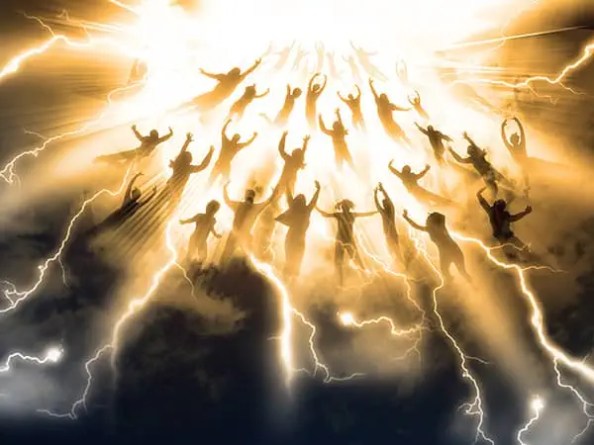
This is no longer talking about the events that followed Antiochus IV Epiphanes desecration of the Jewish people in 168 BC. The dead in Christ will be awakened when Christ returns and raptures his people. This is obviously talking about the future. And better yet, this fits the eschatological model. It tells us that the faithful to God will suffer great persecution, but God will redeem them in the end. The passage concludes with a simple description of the judgment the wicked will face. Some will awake to “shame and everlasting contempt.” All three themes are evident in this passage and follow the thematic pattern.
Matthew 24 is another fantastically overlooked example demonstrating this model beautifully. It begins with the disciples of Jesus asking Him “what will be the sign of Your coming, and of the end of the age?”
Jesus answers them in verse 2 by saying, “Take heed that no one deceives you. For many will come in My name, saying, ‘I am the Christ,’ and will deceive many.”
He goes on to list a few other things but then tells them, “If you think that’s bad, just wait till what’s coming. That’s just the beginning of sorrows.” (Brad’s translation) Verse 9 continues on and says,
“Then they will deliver you up to tribulation and kill you, and you will be hated by all nations for My name’s sake.”
Are we not beginning to see the same eschatological pattern develop? Did we not just hear that a false prophet will arise? Did we not just hear of the great tribulation to follow when that happens? Jesus isn’t done drawing it out for us though. In case there was any doubt that Jesus is following the same pattern seen all throughout Daniel, he specifies when this great tribulation of believers will begin. Matthew 24:15-22 says,
“Therefore, when you see the ‘abomination of desolation,’ spoken of by Daniel the prophet, standing in the holy place” (whoever reads, let him understand), “then let those who are in Judea flee to the mountains. Let him who is on the housetop not go down to take anything out of his house. And let him who is in the field not go back to get his clothes. But woe to those who are pregnant and to those who are nursing babies in those days! And pray that your flight may not be in winter or on the Sabbath. For then there will be great tribulation, such as has not been since the beginning of the world until this time, no, nor ever shall be. And unless those days were shortened, no flesh would be saved; but for the elect’s sake those days will be shortened.”
The abomination of desolation was spoken of by Daniel concerning the little horn that blasphemes against God and desecrates the temple. He abolishes the sacrificial system and offerings. He persecutes those faithful to the Lord. Antiochus IV Epiphanes was just a type, or a shadow of what’s to come. He wasn’t the real deal. Even still, he managed to kill over 80,000 people in just 3 days. How much greater will that great persecution be for believers when the antichrist comes? Never before will there be so great a persecution in the history of the world. This is not the wrath of God, as so ignorantly mistaken by pre-trib interpreters. The biblical model Matthew 24 is following clearly distinguishes this great tribulation as the persecution of believers. We see theme one develop: A man will rise to power and blaspheme the Lord. He will claim to be God and demand worship. Now theme two becomes present: He will severely persecute all those who do not bow. There is no redemption prior to this, according to the eschatological model. There is no wrath of God associated with the great tribulation here, according to the eschatological model. It’s the same story repeated by Jesus Christ concerning the fate of the world during the time of the climactic ending. And IF this truly is to follow the eschatological model, we should now see Christ redeeming the faithful to him and punishing the wicked. Well, ladies and gentlemen, without further ado, here is Matthew 24:29-31 –
“Immediately after the tribulation of those days the sun will be darkened, and the moon will not give its light; the stars will fall from heaven, and the powers of the heavens will be shaken. Then the sign of the Son of Man will appear in heaven, and then all the tribes of the earth will mourn, and they will see the Son of Man coming on the clouds of heaven with power and great glory. And He will send His angels with a great sound of a trumpet, and they will gather together His elect from the four winds, from one end of heaven to the other.”
The Lord redeems His beloved people. He gathers them unto Himself. We gotta stop playing around! THIS is the rapture! THIS is the placement of the believer’s redemption according to the eschatological model. And it’s topped perfectly with theme three becoming known: The wicked will receive their judgement. In Matthew 24, we see the response of a world that knows judgement is coming following the redemption of believers. The world is mourning the coming wrath because the rock has come. Everything is in order. Nothing is out of place. This is the only model.
Revelation 6 presents this very same theme through the successive opening of seals. I have a lot more detail on these seals in my post called “The four Horsemen“. So check that out if you want more than just a drive by of these passages. The first seal is of a white horse, with a man riding it whose purpose is to conquer. This is the antichrist rising to power. This idea is carried through the second seal where we see a red horse. From this we can understand that this antichrist’s eyes are set on the world, and he will stop at nothing to achieve it. The peace of the world will be stripped away. At the height of his power, he runs into a problem: famine and inflation, no doubt due to the devastation caused by this world war. This is reflected through the 3rd seal, where a black horse is presented, whose rider is holding a pair of scales. The fourth seal demonstrates how the antichrist took care of this problem. He set up his image and declares himself to be God. “If you want food, if you want to participate in this new world that I have compassionately reset, worship me.” Those who don’t will be sentenced to death. The fourth seal is a pale horse representing death. At the opening of the fifth seal, we learn who suffers from this decree. Revelation 6:9 says,
“When he opened the fifth seal, I saw under the altar the souls of those who had been slain because of the word of God and the testimony they had maintained.”
A man will rise to power and declare that he is God. At the height of his power he will demand worship and severely persecute those who remain faithful to God. Check and check: theme 1 and 2 are present. When the 6th seal is opened, we see the same cosmic disturbances seen all throughout scripture that are to occur on the Day of the Lord. (Check out my post, The Day of the Lord vs The Day of Christ for more on that) When this takes place, we see every unbelieving man running for the hills just as we saw in Matthew 24. But in the midst of that moment, believer, do not fear, for your redemption is near! At the opening of chapter 7 we see God’s people sealed and appearing in heaven, safe from God’s wrath. Chapter 7, verse 9 says,
“After this I looked, and there before me was a great multitude that no one could count, from every nation, tribe, people and language, standing before the throne and before the Lamb.”
The faithful to God will suffer great persecution, but they will be redeemed by God.
When the Lord opens the 7th seal there is silence in heaven for half an hour. Seven angels line up, preparing for the wrath of God to be poured out upon the wicked. Judgement comes for the antichrist and all those who follow him. Theme 3: check. All three elements are in place and in order. This too follows the eschatological model.
The last reiteration of this eschatological pattern comes from the second half of Revelation. Revelation is a book very similar to Daniel in that it repeats or resets the thematic chronology. In Revelation, at chapter 12, the eschatological narrative resets and tells the story from a different perspective, highlighting some different aspects of it. That’s why we see this theme present itself in Revelation again. It won’t take long for you to see that as well. It gets more specific about characters than in the first iteration. Revelation 13:15-17 says,
“The second beast was given power to give breath to the image of the first beast, so that the image could speak and cause all who refused to worship the image to be killed. It also forced all people, great and small, rich and poor, free and slave, to receive a mark on their right hands or on their foreheads, so that they could not buy or sell unless they had the mark, which is the name of the beast or the number of its name.”
Theme one is already established. The antichrist has risen to power and demands worship. That’s check number one. He then will kill all those who refuse to worship him and remain faithful to the Lord. That is check number two. However, if this passage is to continue adhering to the eschatological model presented throughout scripture, we should see God’s people redeemed next. Sure enough, in chapter 14, we see God’s people sealed. Revelation 14:14-16 says,
“I looked, and there before me was a white cloud, and seated on the cloud was one like a son of man with a crown of gold on his head and a sharp sickle in his hand. Then another angel came out of the temple and called in a loud voice to him who was sitting on the cloud, “Take your sickle and reap, because the time to reap has come, for the harvest of the earth is ripe.” So he who was seated on the cloud swung his sickle over the earth, and the earth was harvested.”
The faithful to the Lord are redeemed! This is a beautiful figurative description of the rapture of believers just prior to the wrath of God being poured out. This is not a stretch, nor is it unprecedented. The Bible speaks of this gathering as the “harvest” many times throughout scripture. (ex. Matthew 13:30, 36-39, Luke 10:2) The figurative description continues to present the wrath of God which succeeds the believer’s redemption. Revelation 14:17-20 says,
“Another angel came out of the temple in heaven, and he too had a sharp sickle. Still another angel, who had charge of the fire, came from the altar and called in a loud voice to him who had the sharp sickle, “Take your sharp sickle and gather the clusters of grapes from the earth’s vine, because its grapes are ripe.” The angel swung his sickle on the earth, gathered its grapes and threw them into the great winepress of God’s wrath. They were trampled in the winepress outside the city, and blood flowed out of the press, rising as high as the horses’ bridles for a distance of 1,600 stadia.”
And so, once again, we have the eschatological model laid out for us. A man arises and demands worship as God, the faithful are persecuted, God redeems them, and the wicked receive God’s just wrath.
We are almost done. John doubles down on this in case this figurative example of the rapture and the wrath was unclear. In Revelation 15:1-3 it says,
“I saw in heaven another great and marvelous sign: seven angels with the seven last plagues—last, because with them God’s wrath is completed. And I saw what looked like a sea of glass glowing with fire and, standing beside the sea, those who had been victorious over the beast and its image and over the number of its name. They held harps given them by God and sang the song of God’s servant Moses and of the Lamb.”
The wrath of God is about to be poured out, however, there is a pause and the camera panes over to a group of people too large to count appearing in heaven. We are told that they have just been redeemed and are victorious over the antichrist. It’s the same image we saw in the first half of Revelation. God’s people are sealed, appearing in heaven redeemed, and 7 angels line up in preparation for the wrath of God to be poured out on the antichrist and those who follow him.
There is no pre-trib rapture. There is no instance where redemption takes place before the great tribulation of the climactic ending to this world. There is no “second group” of Christians called tribulation saints that will arise after all other believers get raptured up early. We don’t see that anywhere in the eschatological model repeated over and over and over in scripture. Do not be deceived! Do not take for granted our redemption! Our redemption comes with a heavy price. It comes through much suffering and persecution BECAUSE of our faith. And I know that not all of us personally may experience this climactic ending, but the body of Christ will, and we are all one body of believers. We suffer in spirit with those who will. We prepare our hearts as if it is going to be in our lifetime. We gird up our loins and put on our spiritual armor because it very well could be us! “I tell you these things so that you don’t be offended.” What’s coming is going to seriously test your faith. What’s coming will cause you to be offended by God had he not told you. I don’t want you to be offended. I’m not a clanging cymbal on this topic looking for attention. I’m sticking my nose in the Word of God and showing you clear as day what it says and where we are getting it wrong! Don’t blend the great tribulation with God’s wrath. That doesn’t follow scripture! I don’t want to see any my people falling away when these times come because they did not have deep roots. The Bible says that many will fall away for this reason. Many will because they are unknowingly being led on to believe that Christ is just going to come back at any moment and pop us out secretly before things really start to get bad. What biblical eschatological model does that follow? NONE! That follows a manmade model striping verses out of context and saying, “this passage is only about the Jews.” “That passage is about something we decided to call tribulation saints”. “This passage represents the church age, that’s to be followed immediately by a symbolic image of the rapture to happen before the tribulation”. All of this nonsense takes away from the simple eschatological pattern God echoes all throughout the Bible.
- A man will rise in power and claim to be God, desecrating the temple and demanding worship.
- The faithful to God will be severely persecuted, but God will redeem them.
- The wicked will be judged and Christ will reign over all.
Period. Follow the model. Follow scripture as it is written. Go and be blessed, having full confidence and assurance that though the whole world may crumble into darkness with us being on the butt end of it, everything is still going according to God’s plan. He is faithful. Christ will redeem us and serve justice to the wicked world.
Thank you for reading. God bless you.
 Softly Spoken Truth